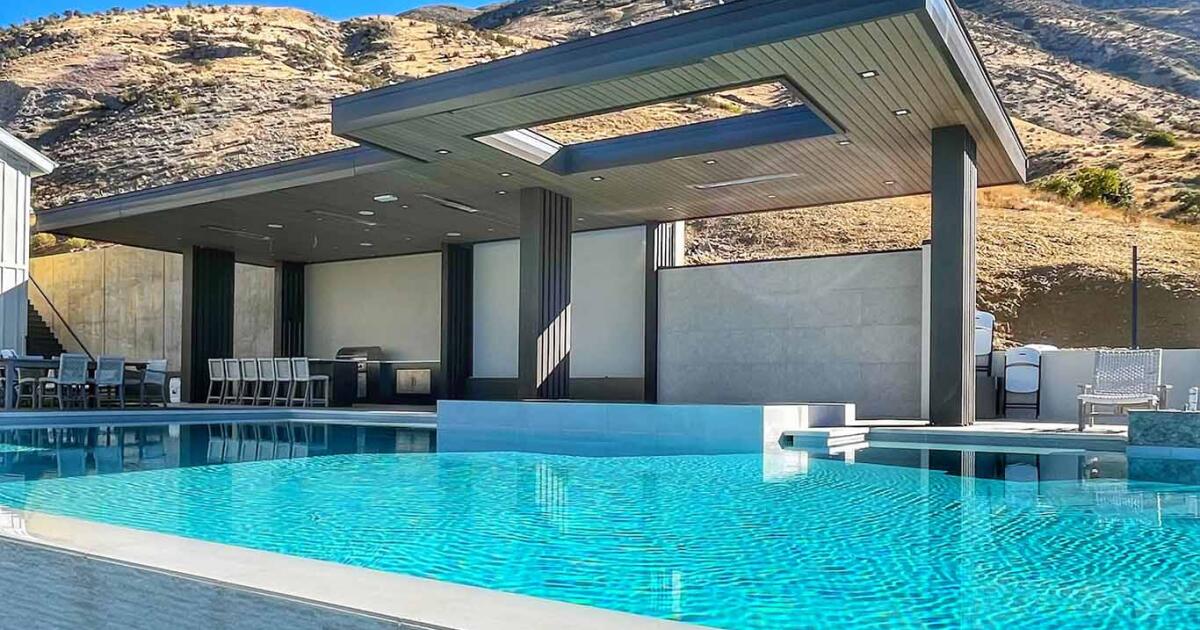
The best outdoor room I saw recently was not in Malibu or the Hamptons. It was a covered poolside outdoor kitchen in Cedar Hills, Utah. It looks just as good in December as it did in July. No winter tarps, no panicked pre-summer refinishing, no apologizing for how it “holds up pretty well considering the weather.”
That’s the standard we should design for. Not outdoor spaces that just survive the seasons, but ones that thrive through them.
RELATED: How Simulated Nature Design Can Trick Your Brain into Feeling Calm
The New Expectation
Outdoor living isn’t a luxury amenity anymore. It’s core residential square footage. More than 75% of millennials now consider outdoor kitchens essential, according to the National Kitchen and Bath Association, and the homes commanding the highest premiums are the ones that blur interior and exterior seamlessly. Buyers expect these spaces to function year-round, not just during the three months when the weather cooperates.
The challenge? Most outdoor spaces are still designed with summer in mind, then forced to endure the other nine months. That approach worked when a deck was just a place to set a grill. It doesn’t work when it’s a $60K outdoor kitchen or a primary entertaining space.
RELATED: Get the Latest LG Promo Codes For December 2025
What Changes When You Design for Reality
Here’s what I’ve learned watching outdoor projects age over the past decade: the spaces that look best after five years aren’t necessarily the ones built with premium materials. They’re the ones where someone thought hard about how weather actually moves through a site.
Take moisture. Everyone knows standing water is bad, but the real damage happens at the micro-level. Moisture working into joints, getting trapped under finishes, creating the perfect environment for mold while simultaneously corroding fasteners you can’t see. Then add thermal cycling (warm days, cold nights, repeat), and you’re basically asking traditional materials to flex in ways they were never designed to handle.
The projects that avoid this aren’t using magic…they’re using smarter planning.
RELATED: Seasonal Interior Design Ideas for a Home That Feels Fresh All Year
What’s Trending in Home Design & Decor
Think Like Water
Proper drainage is crucial for managing where water wants to go on your specific site, then designing transitions and details that move it along rather than trap it. I’ve seen beautiful IPE decks destroyed not by the material itself, but by edge details that created perfect little moisture pockets.
Orientation Isn’t Optional
A west-facing outdoor kitchen in Phoenix needs completely different material thinking than a north-facing covered porch in Seattle. Sounds obvious, but I still see specs rolled out like every site is identical. Areas with intense afternoon sun will experience serious thermal stress with materials that expand, finishes fail faster, and dark stains that can cause warping. Know where your sun hits, where your prevailing weather comes from, and design accordingly.
RELATED:The Everyday Things in Your Home That May Be Fueling Inflammation
Protection Isn’t Decoration
Roof overhangs, pergolas, and covered areas aren’t just about shade and aesthetics… they’re doing real work extending material life. A deck under even partial cover will dramatically outperform an identical exposed deck. The ROI on a well-designed roof structure is extraordinary when you factor in reduced maintenance and replacement cycles.
The Material Revolution Architects Are Missing
Here’s where it gets interesting. For decades, the conversation about outdoor materials was essentially: “Use beautiful wood and maintain it religiously or use plastic composites and pretend you like how they look.”
That binary is over.
We’re seeing a new generation of engineered materials that actually deliver on the promise of low-maintenance aesthetics. I’m talking about bio-based products made from agricultural waste streams like rice husks, materials that would have been burned or landfilled, transformed into products that outperform traditional building materials.
RELATED: 9 Antimicrobial Sheets to Upgrade Your Bedroom and Help You Sleep Better
Projects That Got It Right
I worked with a team on an outdoor kitchen project in Woodbury, New York, where the climate presented a very real test for exterior materials. The space had to withstand cold, wet winters, summer humidity, and repeated freeze-thaw cycles, all while serving as a primary gathering area for the homeowners. They wanted the warmth and familiarity of wood, but they were equally clear that annual refinishing and constant weather-related upkeep were not part of the plan.

Woodbury, New York
(Modern Mill)
I approached the project with long-term performance in mind from the start. Material selection was paired with careful detailing to manage moisture, thoughtful drainage beneath the kitchen zone, and strategic coverage to protect the most heavily used areas without enclosing the space.
Two winters in, the space still looks brand new. More importantly, it gets used year-round because the homeowners are not concerned about damaging it. That’s the metric that matters. Not just how a space performs on paper, but whether it genuinely expands how the house functions and how people live in it.
Or take the Cedar Hills project I mentioned earlier. The architect specified IR reflective tones specifically to reduce thermal stress, incorporated subtle drainage channels at material transitions, and positioned the covered areas to protect the highest-traffic zones. Nothing radical, just thoughtful integration of material science and site reality. The result is an outdoor room that legitimately functions as a year-round living space.
RELATED: How Materials and Light Transform Your Rest
The Honest Maintenance Conversation
Let’s be clear: true zero-maintenance doesn’t exist. But there’s a massive difference between “hose it off twice a year” and “sand, seal, and refinish annually or watch it deteriorate.”
Traditional cedar and IPE decks are beautiful, and some clients will always want them, knowing full well what’s involved. That’s fine, just make sure everyone’s clear on what “involved” means. We’re talking about 8-12 hours of labor annually for an average deck, plus materials, and the reality that even with perfect maintenance, you’re looking at replacement in 15-20 years.
Modern engineered materials flip that equation. Occasional cleaning, very occasional spot repairs, and realistic 25-30+ year lifespans. For most residential clients, that math makes sense.
RELATED: 12 Essential Smart Home Innovations Redefining Luxury Living
What Actually Matters
If I could get architects to focus on just three things when designing outdoor spaces:
1. Design for your actual climate, not your ideal one
Stop using the same details everywhere. Coastal humidity, mountain freeze-thaw, desert heat, and Pacific Northwest rain all require different thinking.
2. Integrate material performance from day one
Material selection shapes everything from structural design to detail development. When you know you’re working with materials that handle moisture differently, you can design details that take advantage of that.
3. Think in decades, not seasons
What will this space look like in year five? Year ten? If the answer involves major refinishing or replacement, reconsider your approach.
The aim isn’t resilience alone, but harmony with the elements. When outdoor spaces are designed to work in rhythm with their environment, they evolve into functional extensions of the home rather than aesthetic obligations.
link