To print this article, all you need is to be registered or login on Mondaq.com.
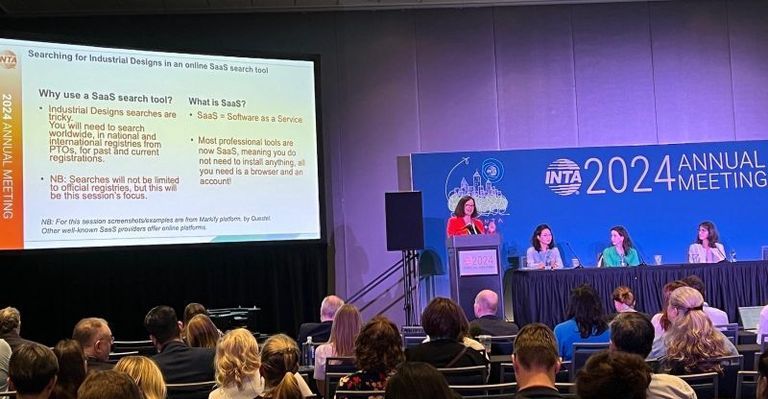
At this year’s INTA Annual Meeting, Questel’s
Marie Farges joined a panel of IP experts to discuss product design
clearance and search strategies, including practical application of
artificial intelligence (AI) in industrial design search tools.
Here, we summarize the content of her presentation, which provided
practical advice on making the most of the latest
technology.
Do-it-yourself industrial design search is easier than ever
before, thanks to innovative software-as-a-service (SaaS) search
tools. From database selection to AI, the latest technology can
streamline the product design clearance process, as Questel’s
Marie Farges presented, alongside a panel of distinguished IP
experts (pictured below), in the ‘Product Design Clearance and
Search Strategies’ educational session at INTA 2024 in Chicago
this May.
Global industrial design search projects are notoriously
difficult, as they require organizations to search in multiple
sources for past and current registrations. As national and
international registries can provide only part of the picture,
searches must also be conducted in additional online and offline
sources, including web content.
Do-it-yourself search tools, such as our Markify ProSearch” and Markify Comprehensive Search tools, provide
organizations with the ability to not only run such searches more
effectively but also to do so directly from their internet
browsers.
As our search platform, like most professional IP tools, is
provided based on the SaaS model, clients do not have to install
any programs or download any software. All they need to start is an
account and an internet connection.
How to Run an Industrial Design Search in an Online SaaS Tool:
5 Simple Steps to Success
- Step 1: Choose your database/coverage
Theoretically, because a design needs to be entirely novel,
industrial design searches should be undertaken on a worldwide
basis. Depending on project importance, product value, or
geographical market, you may need to focus on specific areas,
however.
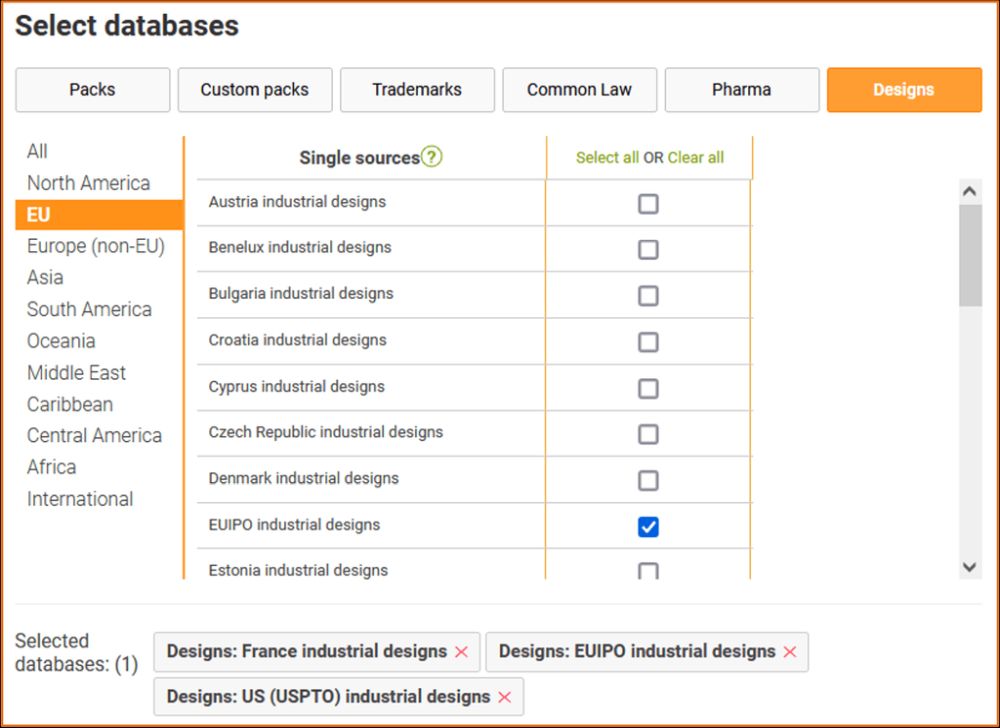
Example databases selection: By geographical zone or
country-specific.
- Step 2: Create your search options
Most professional online tools will allow you to search by
keyword(s), by owner or designer/inventor, and to restrict your
search to specific classes and dates. However, it is also helpful
to use a tool that enables you to search by image too.
Product designs often contain multiple views, so your industrial
design search tool should either allow multiple searches in bulk
and/or enable you to combine searches.
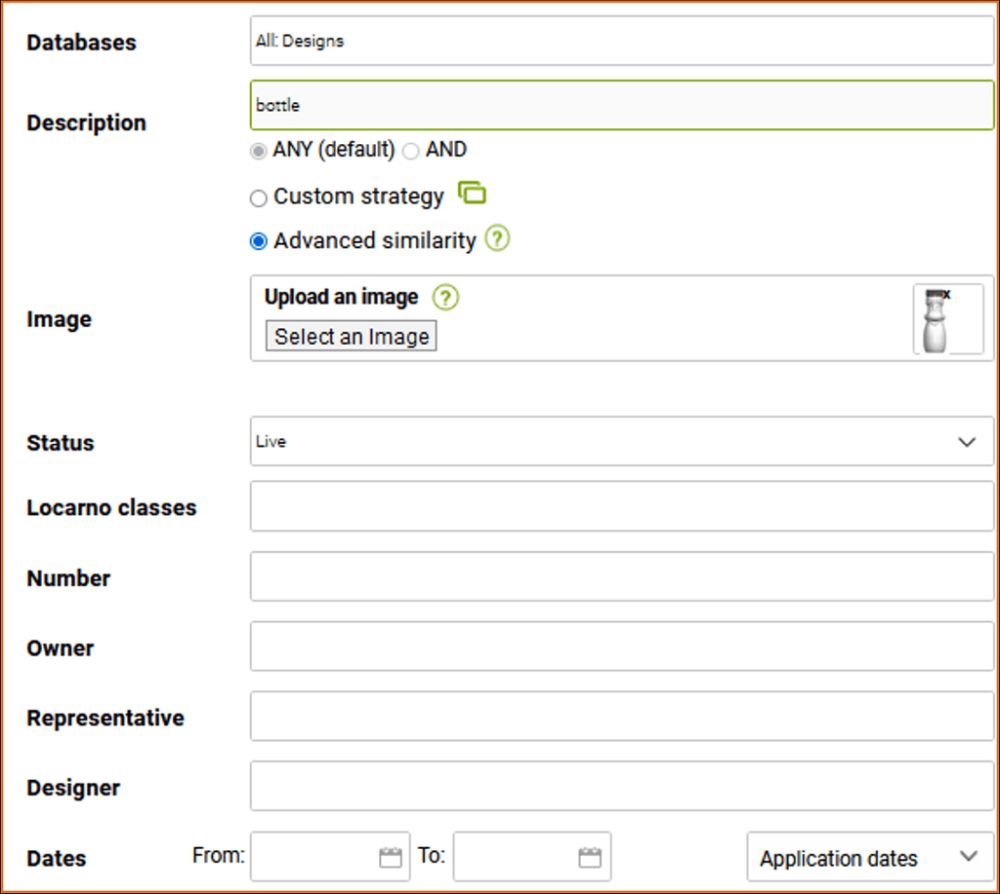
Example of search form fields (Markify ProSearch”)
How AI Can Assist in Industrial Design Image Searches
When undertaking an industrial design search using images, the
tricky part is often image recognition. However, this is also what
most searchers need! Most image recognition tools will use AI to
gather the most relevant results. At Questel, we train our AI model
by feeding it with conflicting pairs, to improve sorting of
results.
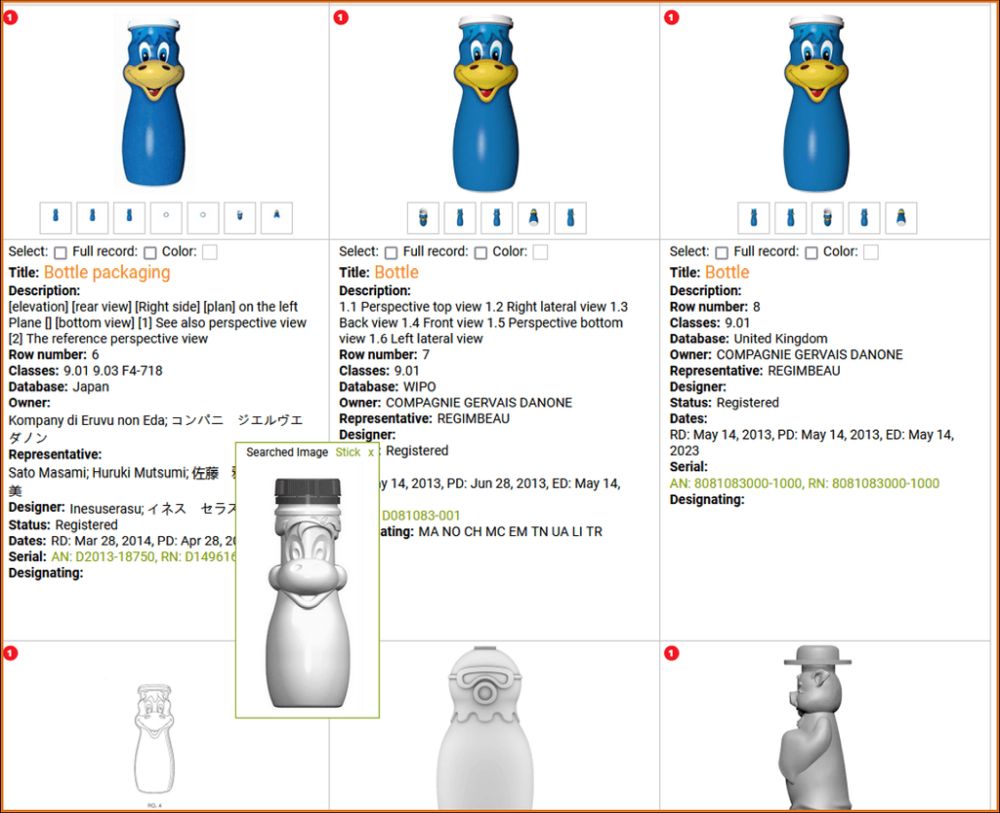
Image searches help searchers retrieve very relevant results
that would be missed by keyword searches alone. The above figure
shows an example of relevant results from an industrial design
search, including the simplified drawing from the registration.
For comparison, in the example shown below, the keyword used was
‘duck’:
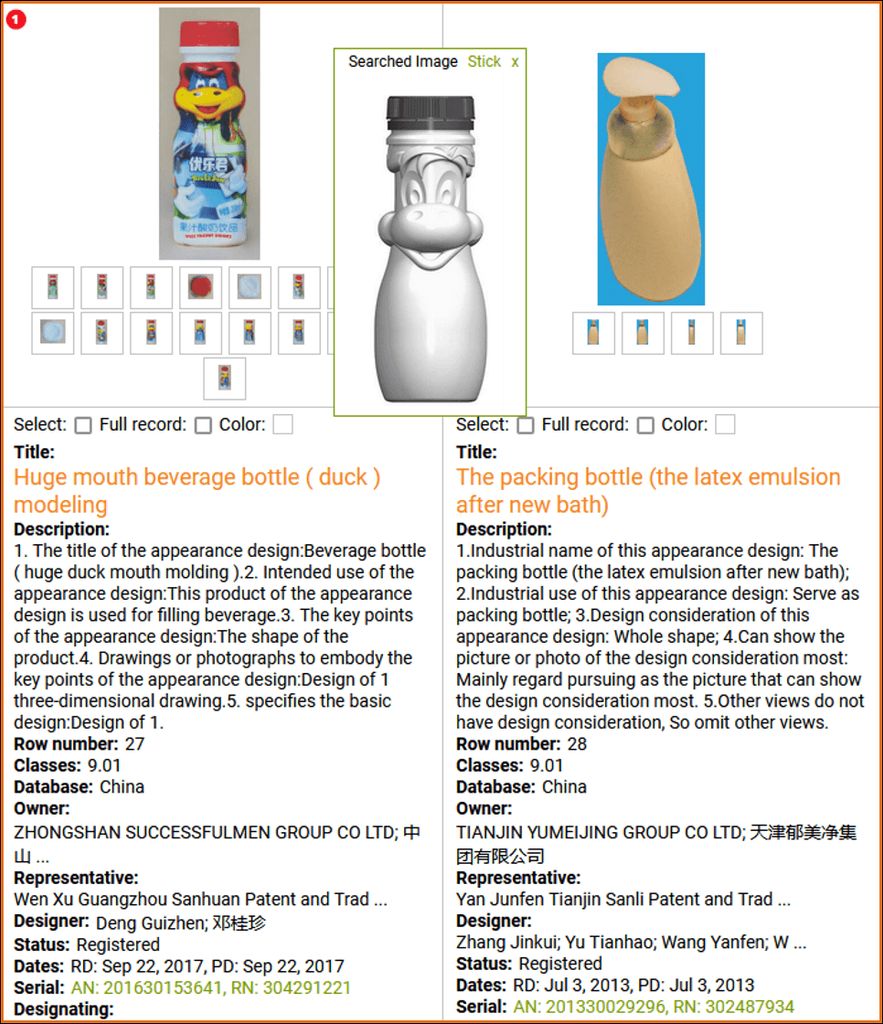
The results show one very relevant result (left), and one
irrelevant one (right):
- The well-known Danone bottle is supposed to represent a
dinosaur, and - The second result is not visually very interesting
Algorithms are not ‘fixed’: they are trained and
are constantly improving to remove the most ‘noise’
(irrelevant results) possible.
- Step 3: Review the results
Result review can be time-consuming, but filtering can help to
save you time. Consider filtering by classes, keywords,
jurisdictions, legal status, or dates. Customizing columns and
image sizes will also reduce time spent.
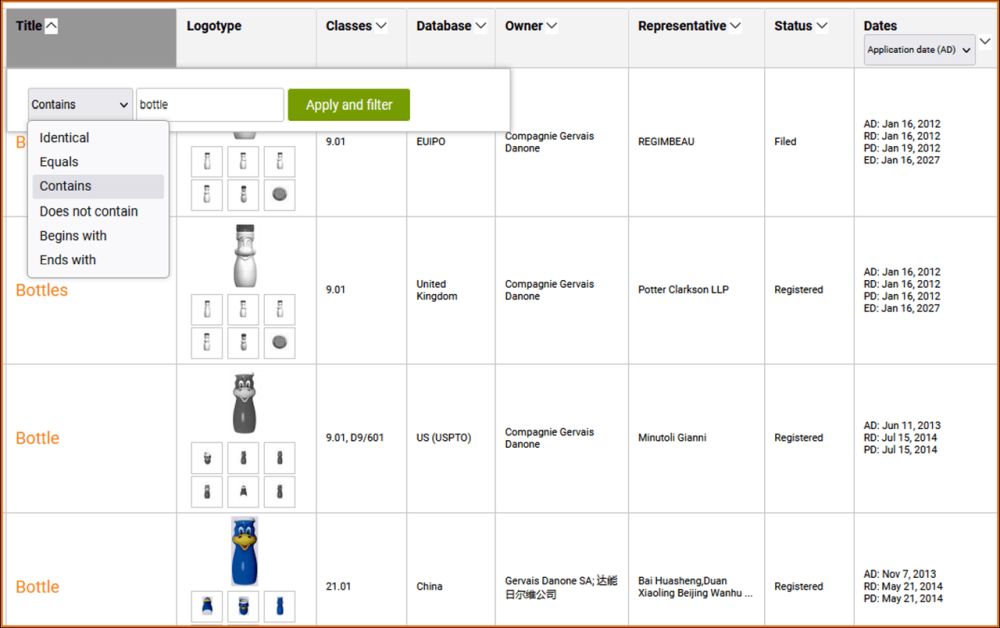
Example of filtering results by keyword present in
title.
To assess the risks strategically, you will want to establish
the location of the main risks. Data accuracy is crucial whichever
platform you use, as you need to be able to quickly check data
(when possible) via the official online patent and trademark office
(PTO) registry.
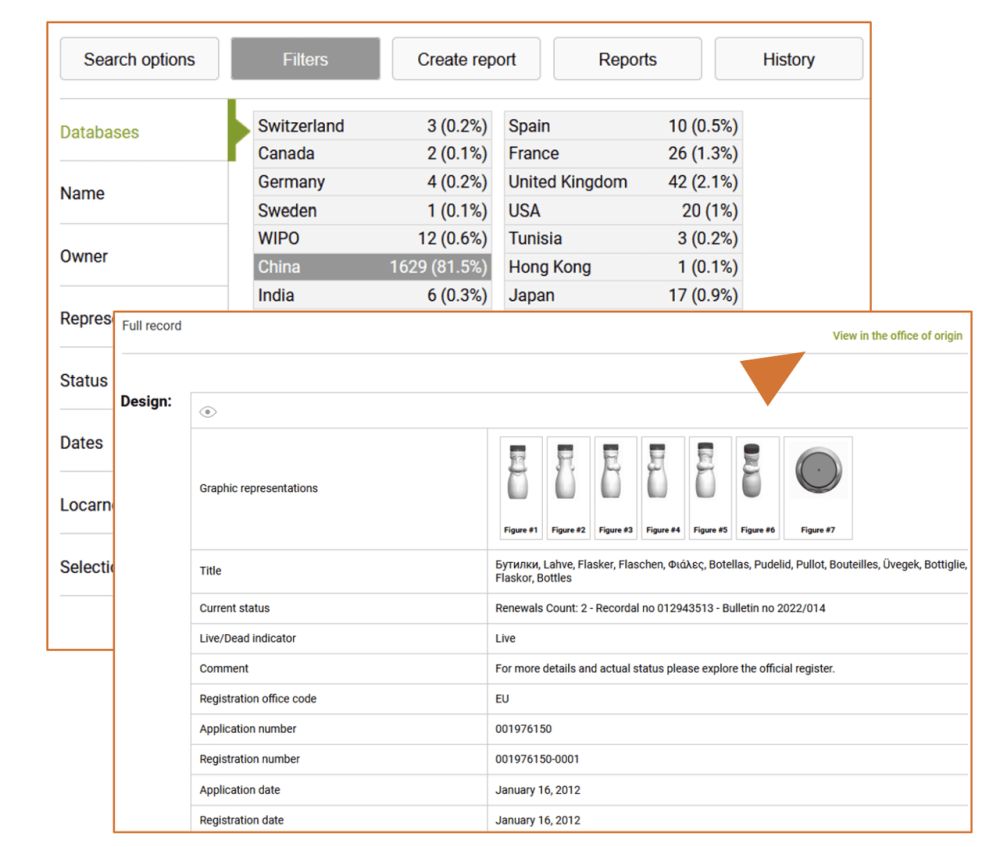
Example of filtering by jurisdiction & example of access
to official PTO data.
After undertaking a complex search, it’s important to be
able to generate simple reports. Whether you work in-house or at a
law firm, you need to be able to convey your legal opinion and
estimate of risk in a way that your audience will quickly
understand—and, ideally, in a customized template.
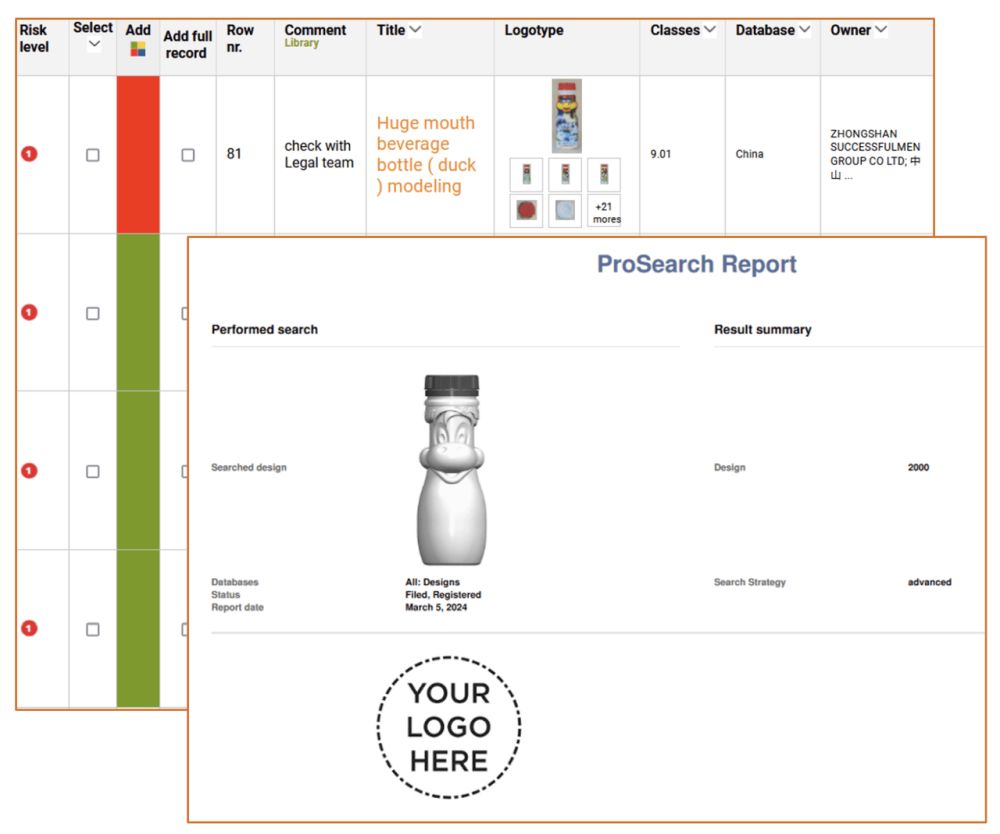
Example of results classified by risk levels with comment
and example of a customized report.
What IP Searchers Tell Us About Industrial Design Search
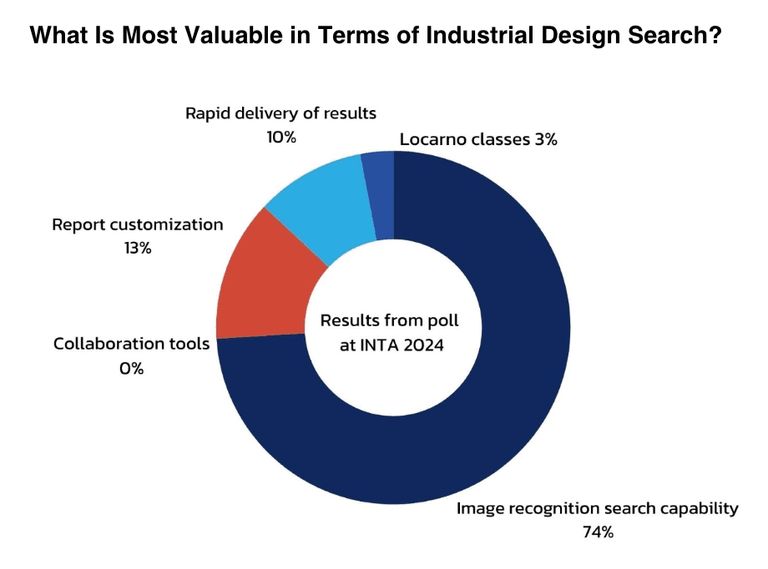
At Questel, we routinely ask our clients, as IP experts, to
share their feedback and strategic needs. From the perspective of
industrial design search, efficient image search, report
customization, and quick results were considered the most valuable
to date.
Not surprisingly, image recognition emerged top of this wish
list in our survey at INTA 2024:
In addition, our clients share that they value: multiple view
searching, legal status information, and an easy-to-use, welcoming
interface.
Have your say!
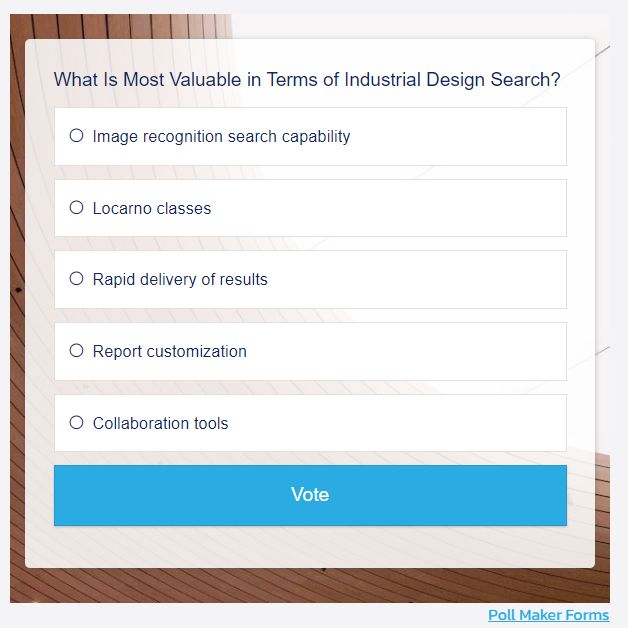
Poll
Maker Forms
Industrial Design Search: When to Do-it-Yourself and When to
Bring in Expert Advice
Of course, online tools have their limits. That’s why we
firmly believe that the best approach is a combination of human
expertise and efficient tools.
Expert knowledge is especially important when it comes to
defining the scope of a search and analyzing the results of image
searches:
- Looking outside the limits of official
registries Your chosen search tool will provide you with a
list of the main databases you should not miss, but what about
searching paper magazines, catalogs, museum content, advertisement
leaflets, etc.? - Image searching Where should you draw the line
when analyzing the results? When is a partially similar design not
‘risky’ anymore?
Industrial Design Search: Three Key Takeaways
1. Image searching is crucial but tricky—so, it’s
important to work with an efficient SaaS search tool or
provider.
2. AI search tools are already advancing the capabilities of
search technology—by working with them today, you can ensure
they evolve and grow with you in the future.
3. Technology provides vital access to data and some of the
answers—but human expertise is a non-optional factor in the
success of any
The content of this article is intended to provide a general
guide to the subject matter. Specialist advice should be sought
about your specific circumstances.
link